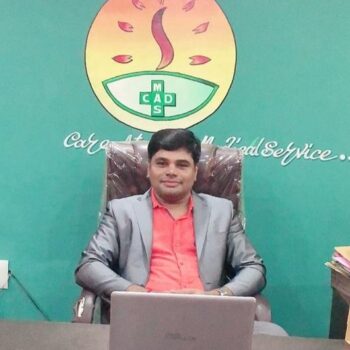
NGO-CAD MS Trust is a charitable Non-Governmental Organization-NGO, established on 28th February 2009 by our Chairman Dr. Sreedhara K C { MBBS. MD. MHA. MLE. FNR (UK), Dip CMH(NIMHANS), Medical Director & Consultant Neuro Physician / Rehabilitation / Mind Health / Medicolegal and Mrs. Deepa at Vijayanagar. The organization is registered under 12 A, 80 G, FCRA and with the Department for Empowerment of Differently Disabled & senior citizens of Karnataka, Ministry of Social Justice Delhi & NITI Aayog of India. CAD MS TRUST® has been in this field since 15 years and works for the empowerment of people with disabilities, elderly group, mentally challenged children and adults, stroke, head injury , palliative patients and Beggars and Transgenders to improve their quality of life. CAD MS Trust envisions a society where everyone has the right to an active, healthy and dignified life.
CAD MS TRUST® has been in this field since 15 years and works for the empowerment of people with disabilities, elderly group, mentally challenged children and adults, stroke, head injury , palliative patients and Beggars and Transgenders to improve their quality of life. CAD MS Trust envisions a society where everyone has the right to an active, healthy and dignified life. CAD MS Trust voices their concerns, so they can lead secure & dignified lives. With this sole purpose, CADMS TRUST has established and running several centres in Bangalore.
UNIT- DEEPASHRI 2010
BANGALORE
– CHARITABLE HOSPITAL-2010
– REHABILITATION CENTER-2013
– NMBA (Nasha Muktha Bharath Abhiyaan)-2021
– SMILE (TG-Transgenders)-2024
RAMNAGAR (BIDADI)
-OLDAGE HOME (IPOP)2020
DAKSHINA KANNADA (PUTTUR)
-OLD AGE HOME (GOK) 2021
MYSORE
-Rehabilitation Center (DDRS) 2022
SMILE
– Beggary – 2022
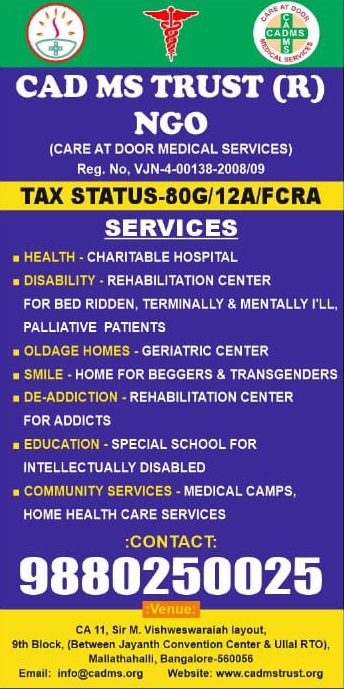
Health
Deepashri Charitable Hospital in Sir M Vishweshwaraiah Layout, Bangalore, provides affordable medical care to underprivileged communities with fully equipped departments and 24/7 emergency services for timely treatment.
Disability
Deepashri Rehabilitation Center in Sri M Vishweshwaraiah Layout provides care for bedridden, terminally ill, cancer, stroke, and mentally disordered patients, offering treatments, physiotherapy, and ambulance services.
De-Addiction
Deepashri De-addiction Center, running since 2017 under CAD MS Trust, helps individuals struggling with alcohol, drugs, substance abuse, and gadget addiction, offering psychotherapy and counseling.
Old Age Home
Deepashri Geriatric Center/Old Age Home, supported by CAD MS Trust, provides nursing care, residential facilities, fitness, and mental wellbeing for elderly individuals, with centers in Bangalore – Sir M Vishweshwaraiah Layout, Bidadi – Ramanagar , and Puttur – Mangalore.
Education
Deepashri Special Needs School provides education, nutrition, healthcare, and vocational training, impacting hundreds of beneficiaries. It focuses on the overall growth and development of children.
Community Development
Dr. Sreedhara KC, Chairman of CAD MS TRUST, was named Director of Community Service by Rotary Club, Bangalore. He authored a Stroke Manual and presented internationally.
SMILE Project
Ministry of Social Justice – New Delhi @MYSORE for Beggars & Homeless running in association with Mysore City corporation @BANGALORE for Destitute Transgenders Running in association with Women & Child Development.
Happy Stories
This hospital was really wonderful,specially taking care of bedridden old age people, well maintained, kind supporting staff and nurses. Dr.Shridhar always supportive. Thanks alot for providing opportunity to get services.🙏
Ramesh K
Rated 5 out of 5
Dr. Shreedhara has great expertise and knowledge. Thankful!